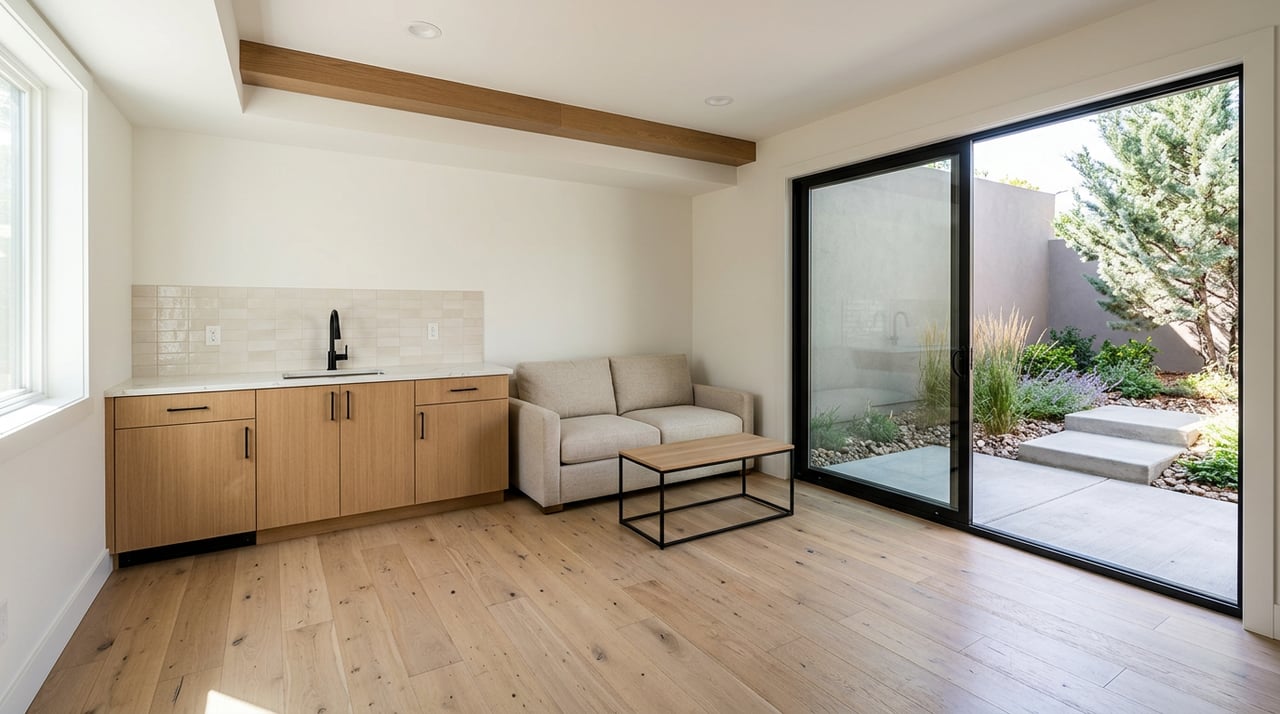
House hacking can be a smart way to live in Wheat Ridge while your home helps pay its own bills. Maybe you rent a bedroom, convert a basement, or build a small backyard cottage. If you want to offset your mortgage and still enjoy a single-family lifestyle, this guide shows you practical options, key rules, and a step-by-step path for getting started. Let’s dive in.
What house hacking looks like in Wheat Ridge
Roommates inside your home
Renting one or two bedrooms in your owner-occupied home is the simplest path. You avoid creating a second dwelling unit, and your main focus is safety and occupancy. Make sure bedrooms have proper egress and working smoke and CO detectors. Confirm local occupancy and building code basics before advertising rooms.
Renting a finished basement
A basement can be rented two ways. If it stays as bedrooms or a suite without a separate kitchen, it is usually treated like a room rental. If it has an independent kitchen plus living, sleeping, and bath areas and its own entrance, the City will likely treat it as an ADU, which requires permits, life-safety upgrades, and inspections. If the basement unit existed before August 15, 2022, you can apply to legalize it under the City’s process and timeline.
Creating an attached private suite
When you add a kitchen and bath to an internal suite, it becomes an attached ADU. You will need to meet Wheat Ridge’s ADU size limits, building code, and fire separation rules, and you will go through plan review and inspections. This approach creates a private, rentable space without changing the exterior footprint much.
Garage conversion or detached ADU
You can convert a garage or build a detached backyard ADU in many Wheat Ridge single-family zones. Detached ADUs must follow setbacks, height, bulk plane, and utility rules, and you will submit plans for building permits and life-safety review. Owners often like this option because it separates daily living between the main home and the rental.
Short-term rentals with an ADU
Wheat Ridge requires short-term rental licensing and lodgers’ tax. ADUs are not eligible as whole-home short-term rentals. A legal ADU can often work as a partial-home STR if you live on the property and follow the City’s STR rules and licensing steps.
Key rules to know first
Wheat Ridge ADU basics
Wheat Ridge adopted citywide ADU rules in 2022. ADUs are allowed as an accessory use to single-detached homes in residential, agricultural, planned development, and some mixed-use zones. They are not allowed on duplex or multi-unit properties. Both attached and detached ADUs are permitted. The ADU may not exceed 1,000 square feet or 50 percent of the main home’s gross floor area, whichever is smaller. Detached ADUs have a height cap of 25 feet. For complete details and application links, start with the City’s ADU resource page.
State law update
Colorado’s HB24-1152, effective June 30, 2025, requires many jurisdictions to allow at least one ADU where single-detached homes are allowed and limits certain local restrictions, including some parking and owner-occupancy requirements. Wheat Ridge amended its language to align with the law. If you live in an HOA or PUD, the state law also constrains rules that unreasonably prohibit ADUs, although reasonable design rules can still apply.
Permits, fire-safety, and utilities
Creating a new ADU or converting a space into an independent dwelling triggers building permits, plan review, and inspections. Fire access is a specific requirement. The ADU must be within 150 feet of an approved fire access road or sprinklers may be required. Attached ADUs need proper fire separation. You also must coordinate with your water and wastewater districts and provide proof of contact during permitting. Parking is generally not required for ADUs, but short-term rentals can bring additional standards.
Pre-existing units deadline
If you have an existing unpermitted ADU that predates August 15, 2022, Wheat Ridge allows you to legalize it by application. The City set a deadline for those applications. Owners must apply to legalize by August 15, 2026, or face normal enforcement.
Where to read the rules
- Review the City’s ADU program page for process, size limits, and checklists.
- See the amended ordinance for specific standards, including footprint and height for detached structures.
- Confirm short-term rental licensing, partial-home rules, and district caps before you host.
How to run the numbers
A simple method helps you decide if a house-hack pencils out:
Estimate potential rent. Pull local rent comps for studios and one-bed units in Wheat Ridge. Look for similar basement and backyard units and note ranges rather than single points. Tools like Rentometer can provide a quick neighborhood snapshot, but local comps are best.
Scope likely costs. ADU and conversion costs vary widely by type, site, and finish level. National and regional guides show a broad range, often from roughly $50 to $300 or more per square foot. Basements with egress and fire separation work can be on the lower end if utilities are nearby. New detached builds with utility extensions and site work can land higher. Get two to three line-item bids from local contractors for accuracy.
Add soft costs. Include permit fees, design, utility district fees, and any life-safety items like egress windows, sprinklers, or alarms. Ask the City’s Building Division for current timelines and fee estimates using the online permitting portal.
Model cash flow. Start with gross monthly rent. Subtract vacancy, utilities you plan to cover, maintenance, insurance changes, and taxes. If you are financing construction, include the payment. Sensitivity test lower rents and higher costs so you know your margin.
Ask your lender about ADU income. Many loan programs now allow documented ADU rental income for qualification under program rules. Documentation often includes an appraisal rent schedule and a lease or tax returns. Confirm the exact requirements for your loan type early.
Property checklist when you tour
Use this quick list to evaluate single-family homes for house hacking potential:
- Zoning and parcel status. Confirm that an ADU is allowed on the lot under Wheat Ridge rules.
- Layout and separation. Look for a separate entrance, a safe egress path, and space for a full kitchen and bath if you plan an ADU. No kitchen usually means a room-rental scenario rather than an ADU.
- Lot and building envelope. Check setbacks, lot coverage, and bulk plane. Detached ADUs must fit the footprint and height rules in the ordinance.
- Fire access. Measure or estimate the distance from the ADU location to an approved fire access road. If it exceeds 150 feet, plan for a sprinkler discussion with the Building Division.
- Utilities. Identify water, sewer, electric, and gas locations. Separate meters are not always required, but districts may have connection or capacity steps and fees.
- STR intent. If you want short-term rentals, confirm licensing, caps, and partial-home rules before you invest.
- HOA or PUD. Review recorded covenants. State law limits unreasonable prohibitions, but reasonable standards may still apply.
- Permits and fees. Use the City’s online portal to see submittal steps and target timelines so you can set a realistic schedule.
- Insurance and taxes. Check with your insurer and the Jefferson County Assessor’s office to understand coverage impacts and how improvements may affect assessed value.
Financing and appraisal notes
If you plan to use ADU income to qualify, talk with your lender before you write offers. Fannie Mae’s selling guide update outlines when ADU income can count and what documents are needed. FHA has also signaled flexibility on ADU rents in certain cases. Expect to provide an appraisal rent schedule and, depending on the program, a lease or tax documentation. Requirements vary, so getting clarity early helps you shop the right homes and stay within your debt-to-income target.
Short-term rentals at a glance
- You need a City STR license and you must collect lodgers’ tax.
- ADUs cannot be rented as whole-home STRs.
- Partial-home STRs may be allowed if you live on the parcel and follow rules.
- The City caps non-owner-occupied whole-home STR licenses by council district.
- Confirm parking and compliance steps before you host.
A simple action plan
- Start with a feasibility scan. Check zoning, lot size, layout, and any signs of a pre-existing unit. If you suspect an older ADU, note the City’s legalization deadline and process.
- Pull rental comps. Validate achievable rents for similar basement or one-bed units using neighborhood data and local property managers.
- Call the Building Division. Ask about likely permit triggers and any fire access or sprinkler questions. Contact your water and sewer districts to understand tie-in requirements and fees.
- Get contractor bids. Request two to three written proposals with line items for egress, fire separation, utilities, and finishes so you can firm up the budget.
- Verify financing. Confirm whether ADU income can be used for your loan and what documentation your lender will require.
- If STRs are part of the plan, review the City’s STR licensing steps and confirm your model is permitted.
Work with a local advisor
If you want a single-family home that can support roommates, a basement suite, or an ADU, you need a plan that balances lifestyle, code compliance, and ROI. As a senior, referral-driven advisor in Wheat Ridge and the West Denver corridor, I help you identify on-market and off-market homes with house-hacking potential, pressure test the numbers, and coordinate the right local pros for bids and permitting questions. When you are ready to buy or sell, I negotiate with a clear strategy and keep your long-term goals front and center.
Ready to explore house-hacking options or evaluate a specific property? Call Brian — Start with a conversation about your home on the boutique, service-first site for Brian Grace.
Important disclaimer
This article is general information, not legal, tax, or lending advice. Verify all requirements and costs with the City of Wheat Ridge Building Division, your water and wastewater districts, a licensed lender, an attorney, and a tax professional before you proceed.
FAQs
Can I rent my Wheat Ridge basement without a permit?
- If it has a full kitchen and functions as a separate dwelling, it likely requires ADU permits and life-safety upgrades; if it is just rooms without a kitchen, it is typically a room rental that still must meet occupancy and safety rules.
Are ADUs allowed for Wheat Ridge single-family homes?
- Yes, ADUs are allowed as an accessory use to single-detached homes in several Wheat Ridge zones, subject to size, height, setback, and life-safety standards.
Can I Airbnb a Wheat Ridge ADU if I live on-site?
- You may operate a partial-home STR in a legal ADU if you live on the property and obtain the City STR license, but ADUs cannot be whole-home STRs.
Do I need a separate utility meter for an ADU in Wheat Ridge?
- Not always; requirements vary by water and sanitation district and utility provider, and the City requires proof that you have coordinated with them during permitting.
How big can a Wheat Ridge ADU be?
- An ADU may not exceed 1,000 square feet or 50 percent of the main home’s gross floor area, whichever is smaller, and detached ADUs have a 25-foot height cap.
What if my property already has an old, unpermitted ADU?
- Wheat Ridge allows owners to legalize pre-existing ADUs, but you must apply by the City’s stated deadline to avoid enforcement.
Will ADU rental income help me qualify for a mortgage?
- Many programs allow documented ADU income under specific rules, so you should confirm required documents and eligibility with your lender early.
What permits do I need to convert a garage into an ADU?
- You will need building permits, plan review, and life-safety approvals, and you must meet setbacks, bulk plane, height, and utility coordination requirements.
City ADU program page
Ordinance 1822, Section 26-646
Colorado HB24-1152
Wheat Ridge STR rules
Permitting portal
Use ADU income in lending
Rentometer Wheat Ridge rents
ADU cost guide
Jefferson County Assessor FAQ
