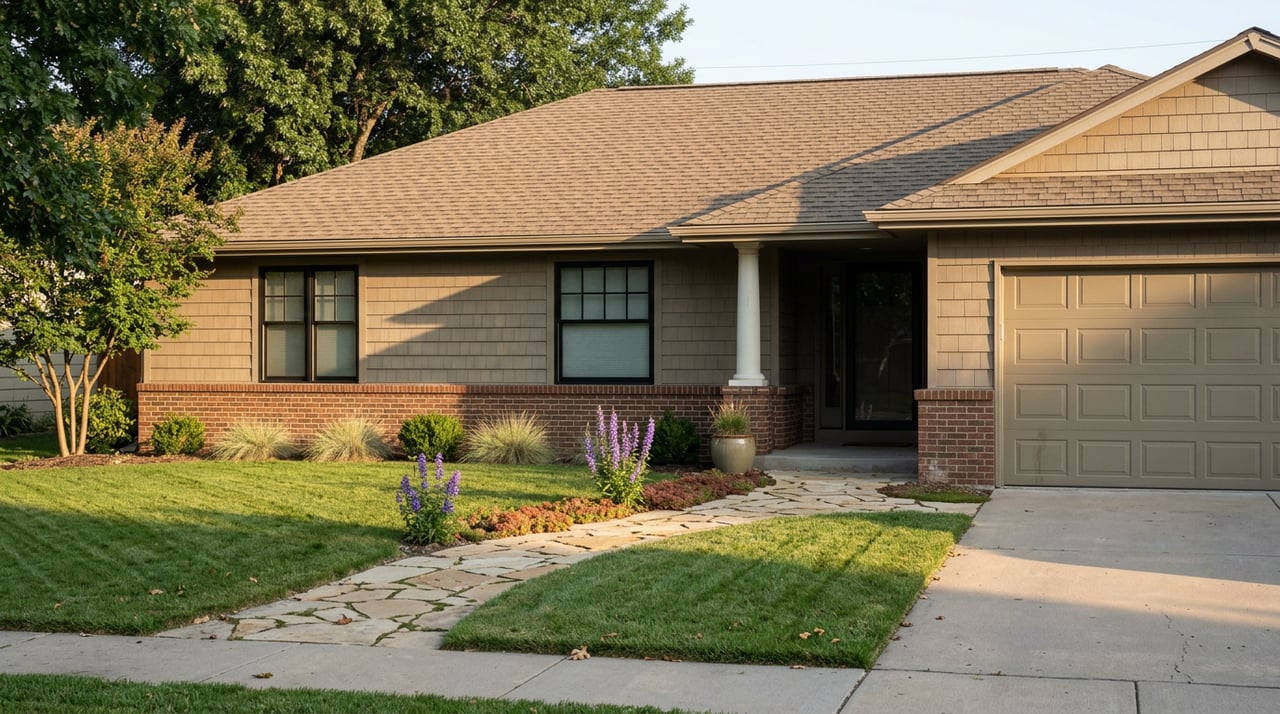
Would you pay several thousand dollars more a year for a house that looks, on paper, exactly like the one three miles away?
Most buyers touring Arvada right now are comparing square footage, school assignment, and how far the garage is from the kitchen. Almost none of them are comparing mill levies. That is a mistake, because in parts of Arvada, a home's annual property tax bill has less to do with its market value and more to do with when it was built and who paid to put in the streets.
Two houses can list at the same price. One can carry a tax bill thousands of dollars higher than the other, every year, for up to three decades. The gap has a name: metro districts. And it rarely comes up until you are already deep into a contract.
Why Newer Arvada Neighborhoods Come With Their Own Small Government
Older, built-out sections of Arvada, places like Scenic Heights, sit on infrastructure that was paid for and finished long ago. The roads, curbs, water lines, and sewer connections already exist. A buyer there pays the standard mix of city, county, school, and special-district mill levies and that is the whole story.
New subdivisions built on former open land do not have that luxury. Someone has to pay for the streets, the detention ponds, the water and sewer lines, and the parks before a single house can be sold. Developers have two ways to handle that cost. They can build it into the price of the home up front, the way KB Home did at Westwoods Mesa, where buyers pay Arvada's standard levies and nothing more for infrastructure. Or they can form a metropolitan district, a small special-purpose government authorized to issue 30-year bonds that pay for the infrastructure now and get repaid later through an additional mill levy on every home inside its boundary.
That second option is far more common, because it lets a builder deliver a lower advertised price while someone else, the future homeowner, carries the debt.
Candelas, in northern Arvada, is served by the Vauxmont Metropolitan District. Leyden Rock is served by its own Metro District #5, with a mill levy historically set at 46.25 mills, of which roughly 40 mills goes toward bond repayment and about 6 mills funds the district's own administration. Vauxmont's levy has historically run considerably higher, among the steepest of any metro district in Jefferson County.
None of that shows up in a listing photo.
What the Math Actually Looks Like
The city of Arvada's own portion of the property tax bill is small on its own, listed at a mill levy of just 4.31 as of late 2025 according to the Arvada Economic Development Association. Most of what a homeowner pays goes to schools, the county, fire protection, and water and sanitation, layered on top of that base city rate. A metro district mill levy stacks on top of all of it.
Here is the shape of the comparison, using the neighborhoods named above:
| Arvada area | Metro district? | Who funded the infrastructure | Extra mill levy on top of standard city and county rates |
|---|---|---|---|
| Scenic Heights and other older, built-out sections | No | Built decades ago, already paid off | None |
| Westwoods Mesa | No | Builder (KB Home) financed it up front | None |
| Leyden Rock | Yes, Metro District #5 | 30-year bonds | Roughly 46 mills, including about 6 mills for district administration |
| Candelas | Yes, Vauxmont Metropolitan District | 30-year bonds | Historically among the highest in Jefferson County |
The dollar difference is not trivial. On a home valued at $500,000, the gap between an older Arvada address with no metro district and a metro-district address like Candelas has historically run in the range of an extra $2,500 to $3,000 a year, and that gap widens as the home's assessed value climbs over the life of the bond. That is not a one-time closing cost. It is a recurring bill that shows up every January, for as long as the district owes money.
Mill levies are finalized every December and shift from year to year, so the exact current rate for any specific address is worth confirming before you write an offer, not after. Jefferson County's assessor publishes how the calculation works, and the treasurer's office can tell you the current combined mill levy on a specific parcel.
The Disclosure Comes at Contract, Not at the Open House
Colorado law does require sellers to tell you. Every purchase agreement for a home inside a special taxing district must include notice of that fact, and the buyer is entitled to see the district's service plan, its mill levy and debt service caps, and an estimate of future property taxes before the contract is signed. Title work will also show the district's order of organization.
The trouble is timing. By the time that disclosure lands in front of you, you have usually already toured the model home, picked a lot, and started imagining Saturday mornings on that patio. The paperwork arrives after the emotional decision, not before it.
Arvada's own government has flagged a second wrinkle worth asking about directly: whether the metro district's board is still developer-controlled or has transitioned to resident control, since a board still answering to the builder does not always make the same decisions a homeowner board would. The city's page on metro district resident impact lays out what to ask and where to look.
What This Means Depending on Why You're Buying
For a family comparing a new build in Candelas or Leyden Rock against a resale in an established Arvada neighborhood, the sticker price is only half the monthly math. A newer home with a lower base price but a heavier metro district levy can end up costing more per month than an older, pricier home once the tax line is added to the mortgage payment. That is worth running before you fall for the floor plan, not after you have waived an inspection contingency to win it. If you already own in an older part of Arvada and are weighing whether a move up to new construction is worth it, that comparison deserves the same scrutiny, and it pairs well with thinking through the home styles and construction eras common across the city.
For an investor running numbers on a rental, the metro district levy is a direct hit to cash flow, not a rounding error. A property in a high-levy district needs a higher rent to hit the same return as an identical unit without one, and that math should be part of the offer strategy from the start, not discovered after closing. It is exactly the kind of detail worth having covered before you're negotiating an offer rather than after.
Either way, the fix is simple. Before you get emotionally attached to an address, pull the current combined mill levy for that specific parcel from the county assessor or treasurer, ask whether the district's board is developer-controlled, and ask what portion of the levy is bond repayment versus administration. Those three questions take fifteen minutes and can change how you compare two homes that otherwise look identical on paper.
A Few Common Questions
Does the metro district mill levy ever go away? Eventually, once the bonds are paid off, which is typically structured over 30 years. A portion of the levy usually funds the district's own administration separately from bond repayment, so it is worth asking the district directly what happens to the total rate once the bonds are retired rather than assuming the whole levy disappears on a fixed date.
Do all newer Arvada subdivisions have a metro district? No. Westwoods Mesa is a direct counterexample, since the builder paid for infrastructure up front rather than forming a district, so buyers there pay standard rates without the added layer.
How do I find the mill levy for one specific Arvada address? Jefferson County's treasurer and assessor offices maintain parcel-level records, and Jefferson County explains the full calculation if you want to see how the numbers add up before you rely on an estimate from a listing sheet.
A house is still a house, and the right one for your family or your portfolio might well be in a metro district. That is a fine trade to make on purpose. It is a much worse one to make by accident. If you are comparing new construction against an established Arvada block and want someone to run the actual numbers with you before you write an offer, that is exactly the kind of conversation worth having early. Brian K. Grace has spent years walking Jeffco buyers through exactly this kind of math. Call and start with a conversation about what a specific address will really cost you to own.
